6 Easy Baby Puree Recipes Your Little One Will Love
Introducing solid foods is an exciting milestone for both parents and babies. I honestly just couldn’t wait to have my babies try something else other than their milk, i can say so for them as well because at some point the milk alone didn’t seem to cut it anymore for them i could literally see they wanted more. Talk about the stare and droll when they see the grown ups eating. but with all the anxiousness we waited until they were 6 months. Around six months of age is the best and recommended time to start, many babies are usually ready to begin exploring new tastes and textures alongside breast milk or formula. Homemade baby purees are a wonderful way to introduce nutritious foods while giving you complete control over the ingredients.
The best part? You don’t need fancy equipment or complicated recipes. With just a few fresh ingredients, you can prepare delicious baby puree your kid will enjoy.
with my babies we pureed so much that now at our toddler phase we’ve transitioned to lots of smoothies. i will be sharing tried easy baby puree recipes that are nutritious, simple to make, and perfect for beginners.
Its great to make your baby puree at home because homemade baby food offers several benefits. You get to know exactly what your baby is eating. No added sugars, salt, or preservatives. They are obviously more affordable than store bought baby food. Using fresh ingredients will provide excellent nutrition, and its easy to customize based on your baby’s preferences.
Fruits make the best snack starting on the 6th months and after 9 months they continue to be amazing complimenting everyday little meals.In addition to purees, consider these healthy snack options your babies will love.https://sallyohjay.com/baby-snacks-and-teething-foods/
Remember before you begin your baby puree, always introduce one new food at a time and wait 3–5 days before introducing another. This makes it easier to identify any food allergies or sensitivities.
Baby Puree
1. Creamy Sweet Potato or plantain Puree
Sweet potatoes and plantains are naturally sweet, making them one of the easiest first foods for babies. They’re rich in vitamin A, fiber, and antioxidants that support healthy growth and vision.
Ingredients
- 1 medium sweet potato
- 1 whole plantain
- Water, breast milk, or formula (as needed)
- 1 large egg
- peanuts or peanut butter
Instructions
- Peel and dice the sweet potato or plantain.
- Steam for 15–20 minutes until very soft
- Boil egg until properly cooked .
- Blend all ingredients with a little water, breast milk, or formula until smooth.
- Serve warm or cool.
you can Refrigerate for up to 3 days and warm up before babies next feed.
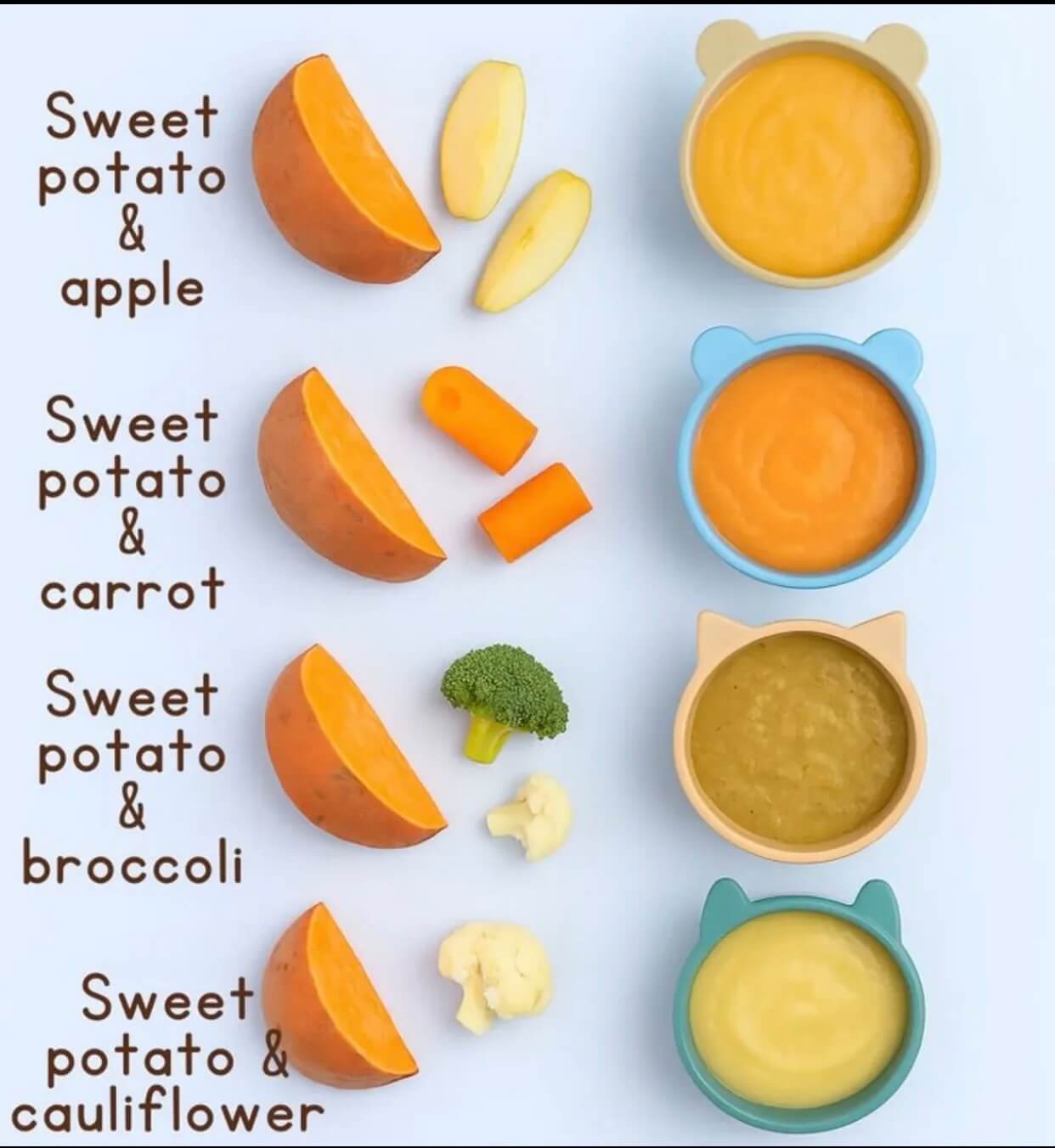
Sweet potatoes are a familiar, necessary, and widely preferred food. Sweet potatoes are not only delicious but also very good for children’s health, especially in the weaning period.
In 100g of sweet potatoes, there are many nutrients such as protein, starch, fat, fiber, and many types of vitamins and minerals in a fairly similar ratio. In particular, the content of micro nutrients in sweet potatoes is many times higher than other foods.
Plantains offer carbohydrates, fiber, folate, magnesium, potassium, and vitamins B6, C, and K. Together, these nutrients help provide energy to fuel baby’s movement and exploration, support the baby’s gut microbiome, and keep baby hydrated. They also help to support electrolyte balance, metabolic processes, skin health, iron absorption, immune function, and blood clotting.
2. Apple & Pear Puree
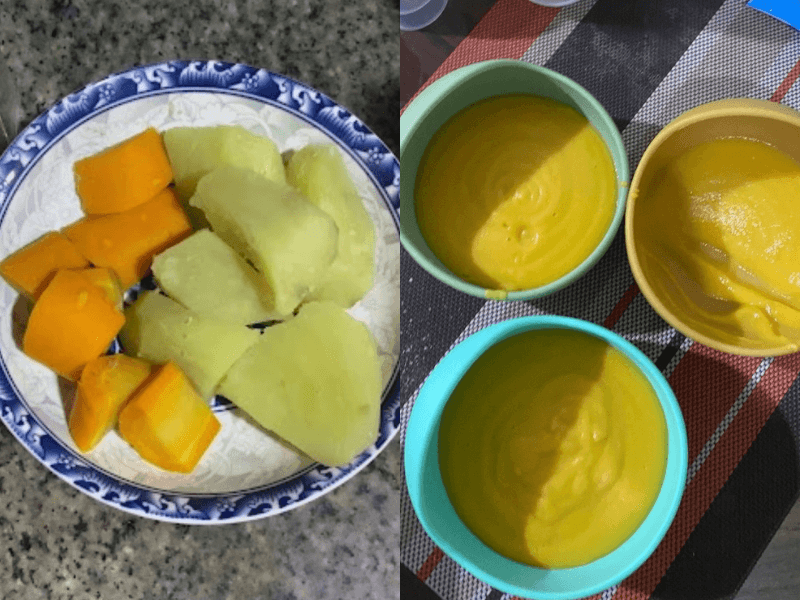
This is one delicious puree my babies really loved, i believe all babies will love. This naturally sweet combination is gentle on tiny tummies and packed with vitamin C and fiber.
Ingredients
- 1 apple
- 1 ripe pear
- ¼ cup water
Instructions
- Peel, core, and chop the fruit.
- Simmer with water for about 10 minutes until tender.
- Blend until smooth.
- Add extra water if needed.
Both apples and pears make a good first food for babies, because these fruits are unlikely to cause an allergy. They also contain the soluble fibre pectin, which helps little bowels to start processing solids efficiently. This delicious mixture of fruits will provide your baby with vitamin C.
Tip: Cinnamon should be avoided until your pediatrician says it’s appropriate.
3. Banana Avocado Puree
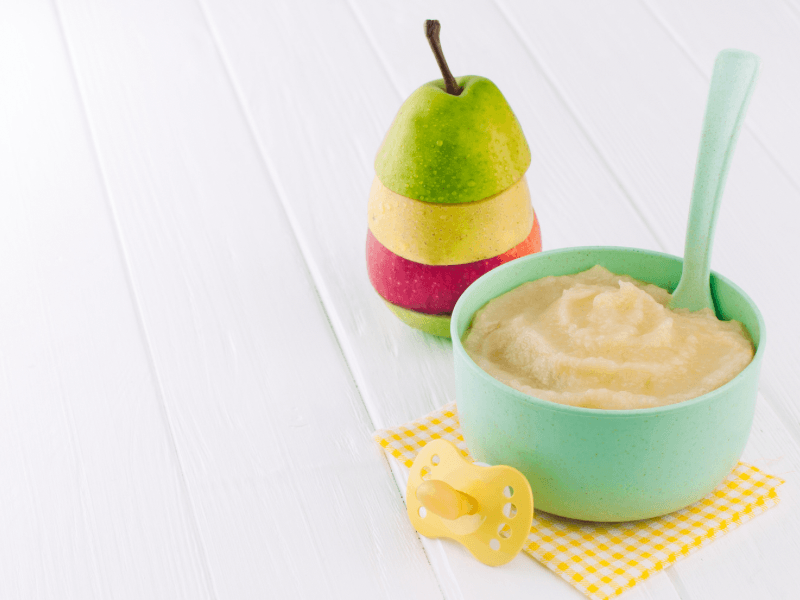
No cooking required! This quick recipe is loaded with healthy fats, potassium, and fiber.
Ingredients
- 1 ripe banana
- ½ ripe avocado
Instructions
- Mash both ingredients together.
- Blend if you want an extra smooth consistency.
- Serve immediately.
Both fruits are incredibly gentle on a baby’s delicate digestive system and naturally mash into a smooth, creamy texture that minimizes choking risks. The combination introduces natural flavors that babies typically love, making it a perfect stepping stone during the transition to solid foods. Note: Avocados brown quickly, so this recipe is best served fresh.
Bananas are rich in potassium,vitamins B6, C and B2, contain calcium and iron, and no cholesterol or sodium. Avocados have a smooth and creamy texture which is rich in unsaturated (or good) fats. They contain lots of fiber and are rich in vitamins and minerals, such as B-vitamins, vitamin K, potassium, copper, vitamin E and vitamin C.
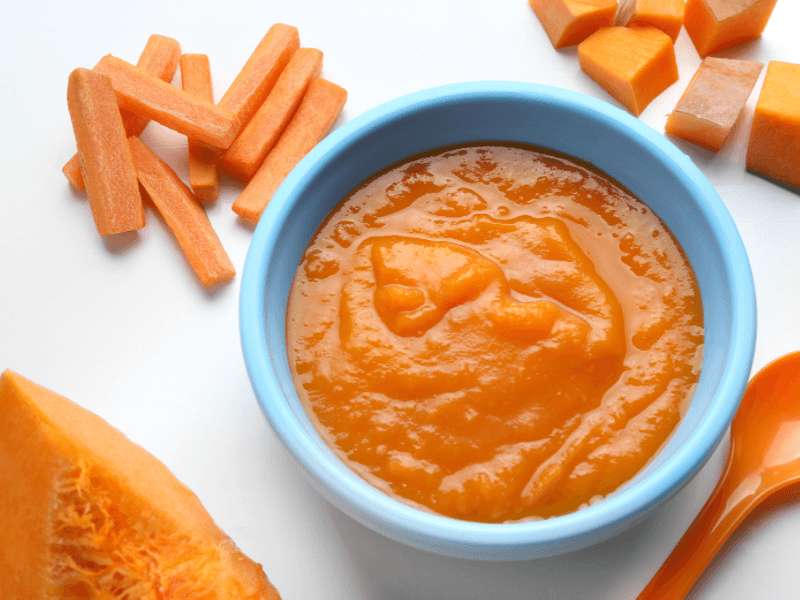
4. Carrot Puree
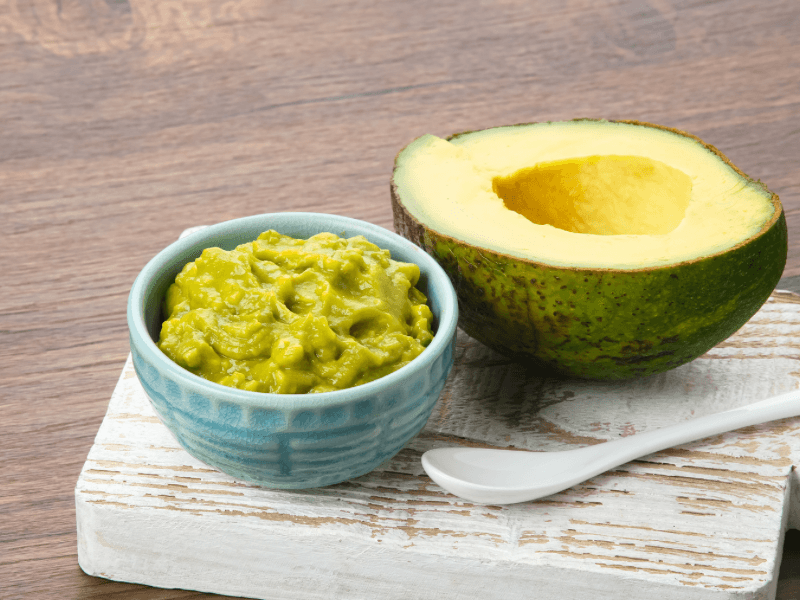
Carrots are an excellent source of beta-carotene, which supports healthy eyesight and immune function. Carrots also provide dietary fiber, which promotes healthy bowel movements and helps prevent constipation, a common concern when babies transition to solid foods.
Ingredients
- 2 large carrots
- Water as needed
Instructions
- Peel and slice the carrots.
- Steam until very soft (about 15 minutes).
- Blend with water until silky smooth.
- Cool before serving.
Carrots can likewise be paired with other foods like sweet potatoes, apples, banana, parsnip, peas, oats or even rice.
Beta-carotene is a fat-soluble vitamin. Mixing the pureed carrots with a tiny touch of breast milk, formula, or a healthy fat (like a drop of olive oil) can improve your baby’s absorption of the nutrients.
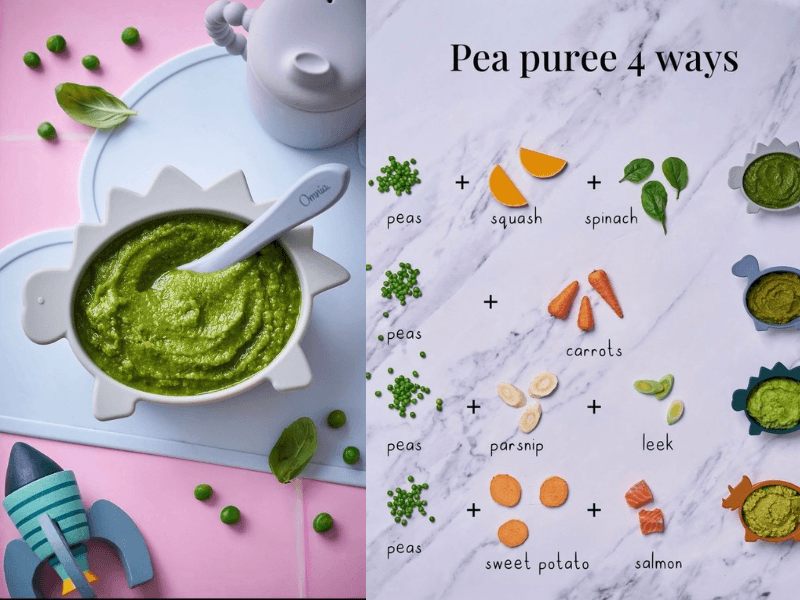
5. Green Pea Puree
Peas are packed with protein, fiber, and vitamins that support healthy development.
Ingredients
- 1 cup frozen or fresh peas
- Water as needed
Instructions
- Steam peas for about 5 minutes.
- Blend thoroughly.
- Add a little olive oil
- For younger babies, strain through a fine mesh sieve to remove skins.
- Thin with water or breast milk if necessary.
You can mix pea puree with other nutrient-dense foods like avocado, sweet potato, or even protein-rich chicken.
Green peas are an excellent first food for babies. They are packed with plant-based protein, iron, and fiber, and they supply key vitamins like Vitamin C and K.Peas contain iron and are also high in Vitamin C, which is a powerful combination because Vitamin C actively helps the body absorb the iron.
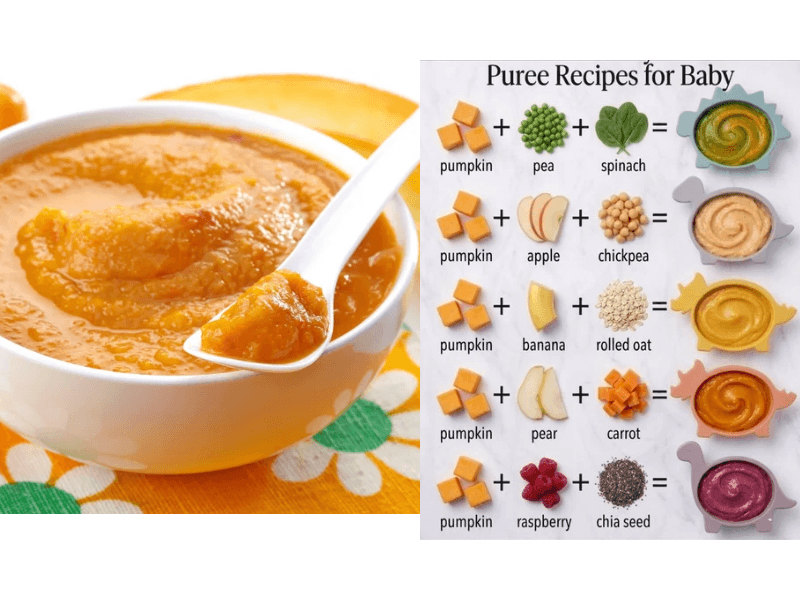
6. Pumpkin & Carrot Puree
This colorful combination is rich in vitamins A and C while offering a naturally sweet flavor babies often enjoy.
Ingredients
- 1 cup pumpkin cubes
- 1 carrot
Instructions
- Steam both vegetables until soft.
- Blend together until creamy.
- Add water, breast milk, or formula for your desired consistency.
Breast milk or formula can help create a smoother texture and provide familiar flavor for your baby.
Pumpkin is an excellent, nutrient-dense first food for babies starting solids around six months. It is soft, naturally sweet, and gentle on sensitive tummies. Packed with beta-carotene, vitamins (A, C, E), and dietary fiber,Pumpkin is loaded with beta-carotene, which the body converts into Vitamin A to support healthy vision and cell growth. It also provides essential minerals like calcium, magnesium, and potassium for rapid bone and muscle development.
Pumpkin naturally contains tryptophan, an amino acid that helps the brain produce serotonin, a neurotransmitter known to induce a calming sensation and help babies settle and have better sleep.
Baby Puree Helpful Tips
Choose Fresh Produce: Fresh, ripe fruits and vegetables generally have the best flavor and nutrition.Fresh homemade puree is best used within 48–72 hours when stored in an airtight container in the refrigerator.
Steam Instead of Boil: Steaming helps preserve more nutrients than boiling.
Skip Salt and Sugar: Babies don’t need added salt or sugar. Natural flavors are enough.
Freeze in Small Portions: Ice cube trays make perfect single-serving portions. Once frozen, transfer cubes to freezer-safe bags.
Label Everything: Write the recipe name and freezing date on storage containers.
Foods to Avoid for Babies Under One Year
While introducing solids, avoid these foods:
- Honey: Do not give your baby honey (even if it’s pasteurized) or foods containing honey such as baked goods, yogurt, etc. There is a risk that honey could make your baby very sick with botulism, a type of food poisoning. Honey is safe for children over 12 months of age. https://www.gov.nl.ca/healthyeating/baby/offering-healthy-foods/foods-to-avoid-for-baby/Some unpasteurized and raw foods may contain harmful bacteria.Do not give your baby:
- unpasteurized juice and cider
- unpasteurized milk and milk products
- raw or under-cooked meat, poultry, fish, and shellfish
- raw or under cooked eggs
- raw or under cooked sprouts
- Added salt: Salt may damage your baby’s kidneys. Your baby will receive all the salt their body needs from breast milk, formula or natural food sources.
- Added sugar: A high consumption of sugar and sugary foods can encourage a sweet tooth and lead to tooth decay when first teeth start to come through. Avoid sweet biscuits and rusks so infants don’t get into the habit of expecting sweet snacks. Limit the frequency of desserts.
- Whole nuts
- Popcorn
- Large chunks of raw vegetables
- Unpasteurized dairy products
Foods that might cause choking include: hard biscuits, raw apple, carrots, celery, sausage skins, whole peas, corn, beans, grapes, nuts, popcorn, hard lollies, corn chips, small bones or gristle.
Babies and young children need to be sitting when eating and drinking to avoid choking.
Always consult your pediatrician before introducing allergenic foods if your baby has eczema, food allergies, or a family history of allergies.
Most babies are ready around 6 months of age to begin solids, though every child develops differently. Signs of readiness include sitting with support, good head control, and showing interest in food.if otherwise speak with your pediatrician before commencing.
Preparing homemade baby puree doesn’t have to be complicated. These six easy recipes are nutritious, budget-friendly, and simple enough for even the busiest parents. As your little one grows, you can gradually introduce new flavors, textures, and ingredient combinations to encourage healthy eating habits from the start.
Remember that every baby develops at their own pace. Offer a variety of wholesome foods, be patient with picky moments, and celebrate each new bite as part of your baby’s exciting food journey.Because it sure will get exciting!